
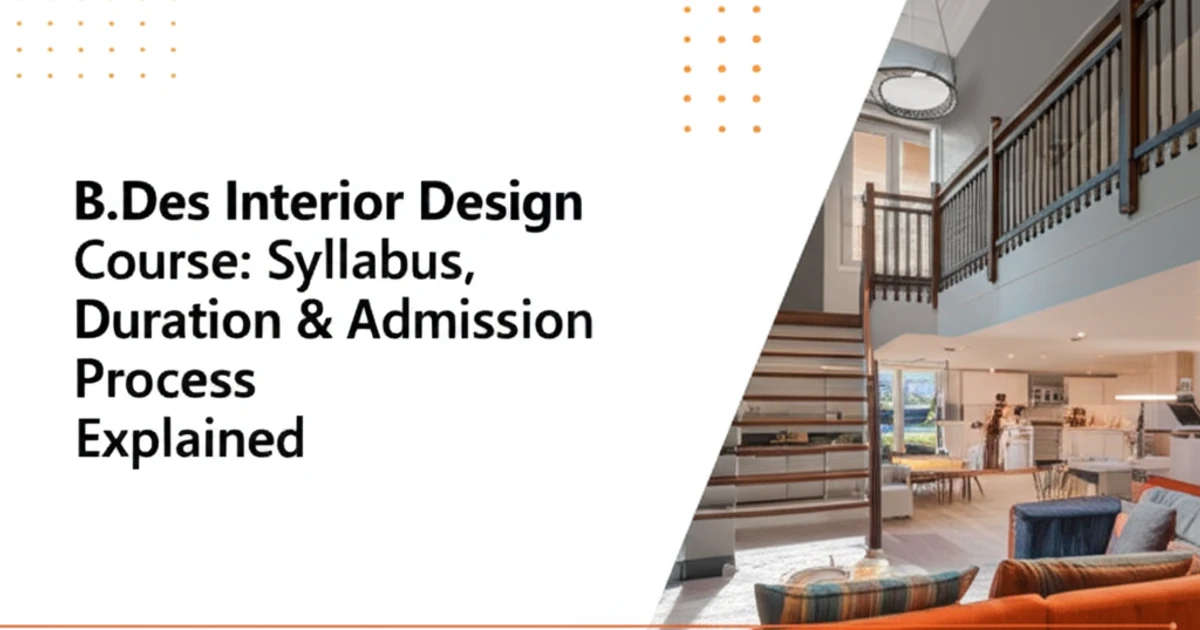
Unlocking Your Vision: A Deep Dive into the B.Des B.Des in Interior Design Interior Design Course
Ever walked into a room and felt an immediate sense of calm, excitement, or pure inspiration? That magical feeling isn’t just accidental; it’s the meticulous work of a talented interior designer. They don’t just decorate; they *create* experiences, sculpt environments, and weave dreams into tangible reality. If you’ve ever found yourself rearranging furniture in your mind, critiquing restaurant layouts, or envisioning a better use of space, then the world of interior design might just be calling your name.
Today, we’re pulling back the curtain on the B.Des Interior Design course – a comprehensive journey designed to transform raw passion into professional prowess. Whether you’re a high school student dreaming of a creative career, a career counselor guiding future talents, or an education consultant seeking detailed insights, you’ve come to the right place. Let’s explore the blueprint for becoming an exceptional interior designer.
Is Interior Design Just About Picking Pretty Colors? (Spoiler: It’s So Much More!)
When many people think of interior design, their minds often jump straight to throw pillows, paint swatches, and stylish furniture. And while aesthetics are undoubtedly a crucial component, this perception barely scratches the surface of what the profession truly entails. Imagine designing a hospital waiting room that calms anxious patients, or an office space that boosts employee productivity, or even a sustainable home that minimizes environmental impact while maximizing comfort.
This isn’t merely about aesthetics; it’s about functionality, human psychology, material science, structural understanding, and even an appreciation for history and culture. The B.Des interior design course is meticulously structured to build this holistic understanding. It’s an intensive program that teaches you not just *what* looks good, but *why* it works, *how* it’s built, and *who* it serves. You’ll learn to blend art with engineering, empathy with innovation, to create spaces that truly resonate.
What Secret Ingredients Stir the B.Des Interior Design Syllabus?
To truly understand the depth of this four-year journey, let’s peek into the core components of the interior design syllabus. It’s far more diverse and intellectually stimulating than you might imagine. Think of it as a finely crafted recipe, with each ingredient playing a vital role in the final masterpiece.
You’ll start with foundational elements like elements and principles of design, color theory, and basic drafting. Soon, you’ll delve into technical drawing, computer-aided design (CAD) software like AutoCAD and SketchUp, and 3D modeling. But it doesn’t stop there. The syllabus will immerse you in the fascinating world of materials and construction, teaching you about everything from sustainable timber to advanced composites. You’ll study lighting design, acoustics, furniture design, and even the history of art and architecture, understanding how past innovations inform present trends. Furthermore, core modules on ergonomics, human factors, and universal design ensure that the spaces you create are not just beautiful but also safe, accessible, and comfortable for everyone. Professional practice and project management modules prepare you for the realities of the industry, from client briefs to budget management.
How Long Does It Take to Sculpt Your Creative Vision? (Understanding the B.Des Course Duration)
The standard B.Des course duration for Interior Design is typically four years. This might seem like a significant commitment, but trust me, every year is a vital rung on the ladder to becoming a competent and confident design professional. This extended duration isn’t arbitrary; it’s essential for a curriculum that needs to cover both the artistic and technical complexities of the field.
During these four years, you’ll progress from theoretical concepts and foundational skills to complex project work and real-world applications. The initial years focus on building your core design vocabulary, technical drawing skills, and historical understanding. As you move into the later years, the projects become more ambitious, often involving real-world briefs, client interactions, and collaboration with other disciplines. Many programs include compulsory internships, allowing you to gain invaluable industry experience and apply your classroom learning in a professional setting. This structured progression ensures that by the time you graduate, you possess a well-rounded skill set, a strong portfolio, and the confidence to embark on your design career.
Unlocking the Doors: Your Journey Through the
B.Des Interior Design Admission Process
So, you’re
convinced? Excellent! Now, let’s talk about how you actually step into this
exciting world. The B.Des Interior Design admission process can vary slightly
between institutions, but generally follows a similar pattern, especially for
prestigious design colleges.
Firstly, the
basic academic prerequisite is usually a 10+2 (or equivalent) qualification
from a recognized board, often with a minimum percentage requirement. While
some institutions may prefer students from an arts or science background, many
welcome applicants from any stream, valuing creativity and aptitude above all
else. The real gateway, however, lies in entrance examinations. Top design
schools often conduct their own entrance tests, such as NID DAT (Design
Aptitude Test) or UCEED (Undergraduate Common Entrance Examination for Design),
which assess your general aptitude, creative thinking, observation skills, and
problem-solving abilities. Many private universities also have their specific
design entrance exams. Beyond the written test, a crucial component is often a
portfolio submission, showcasing your creative work, drawing skills, and design
sensibility. This might be followed by a studio test (a practical, on-the-spot
design challenge) and a personal interview where you can express your passion
and vision. My advice? Start building that portfolio early, practice your
drawing, and stay curious about the world around you – these are your greatest
assets!
Beyond the Blueprint: What Awaits You After the
B.Des?
Completing your
B.Des Interior Design course is not just about earning a degree; it’s about
opening doors to a vibrant, ever-evolving industry where your creativity can
truly shine. The career landscape for interior design graduates is incredibly
diverse and dynamic.
You could embark
on a career in residential interior design, creating dream homes for
individuals, or specialize in commercial interior design, crafting inspiring
workspaces, retail environments, and hospitality venues. Perhaps you’re drawn
to the theatrical, designing sets for film, television, or stage productions.
The field also includes exhibition design, furniture design, sustainable design
consulting, lighting design, and even roles in design journalism or education.
Many graduates choose to work with established design firms, gaining invaluable
experience, while others eventually venture out to start their own studios,
charting their unique creative path. The beauty of this profession is its
constant evolution, meaning continuous learning and new opportunities are
always on the horizon. Your B.Des isn’t just a degree; it’s a launchpad for a
career where every new space is a blank canvas awaiting your transformative
touch.
—
SEO Metadata