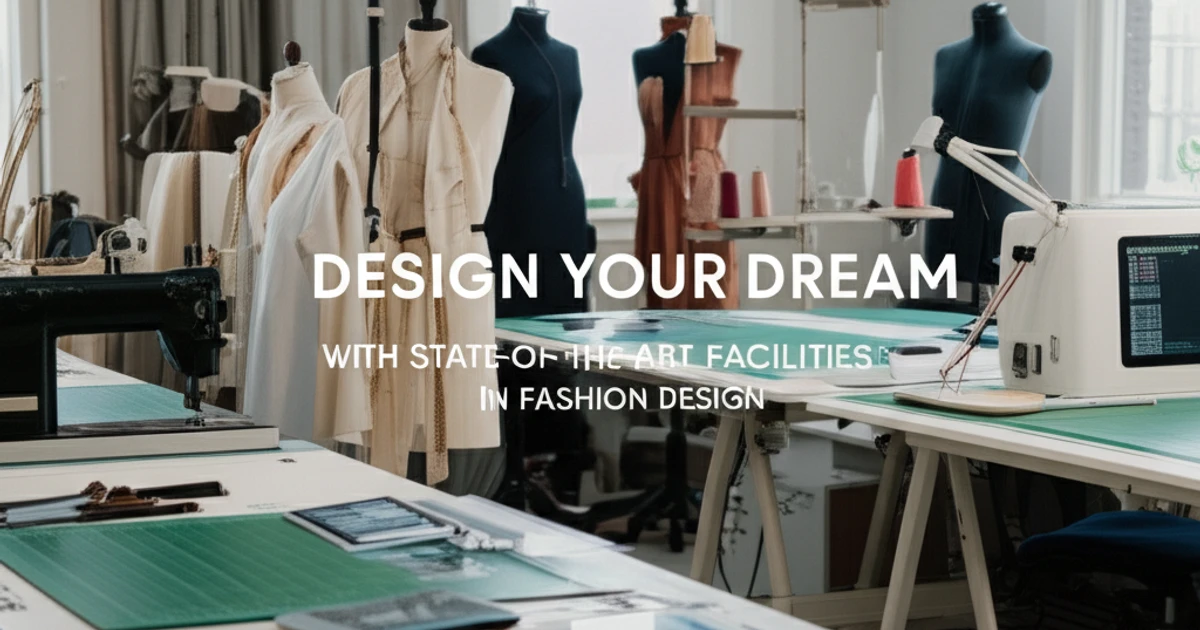
Design Your Dream with State-of-the-Art Facilities in Fashion Design
Introduction
The world of fashion design has become a meeting point of ingenuity, artistry, and the skill of handicraft. In today’s rapid industry, access to top facilities is no longer a luxury but a vital factor for any aspiring designer. From digital design to runway presentation, today’s tools and spaces enable you to manifest your creative vision into professional, market-ready designs.
The role of facilities in fashion design.
Fashion design is much more than putting ideas down on paper; it means bringing those ideas into life. From choosing fabrics to garment construction, the process requires meticulousness, creativity, and the appropriate tools to get the work done. Advanced facilities bridge imagination with execution, helping designers streamline their workflow, ensure accuracy, and elevate design quality.
1. Advanced Design Software
Modern fashion designs are dependent on technology.
Designers can draw detailed sketches, try out color combinations, and build realistic 3D prototypes with the help of CLO3D, Adobe Illustrator, Gerber AccuMark, and Lectra.
A professional lab with such software allows students and designers to be at the forefront of innovations in the fashion world.
2. High-Tech Sewing and Embroidery Machines
Gone are the days when complicated patterns had to be stitched by hand.
State-of-the-art machines by Brother, Juki, or Tajima assure digital precision, speed, and quality consistency. Such tools let designers experiment with complex embroidery, multilayered textiles, and complicated stitching while maintaining professional standards.
3. Fabric Testing and Innovation Labs
Understanding fabric behavior is key to great design.
Today, modern labs test materials for durability, stretch, breathability, and eco-impact to ensure fabrics perform well while meeting sustainability standards.
Innovation labs enable experimentation with biodegradable fibers, smart textiles, and recycled materials, in line with a fashion that is environmentally responsible.
4. Digital Pattern-Making Studios
Accurately made patterns form the basis for garment construction.
Today’s digital studios employ interactive pattern systems such as Gerber and TukaTech for greater pre-production precision, less waste, and faster production. This way, designers can easily modify and visualize garments before actual sampling at significant time and cost savings.
5. Runway and Presentation Spaces
Every designer requires a platform to showcase their vision.
Institutions with in-house runways or presentation studios allow students to practice and perfect their collections under professional conditions. Such places help in refining presentation skills and boost confidence for future fashion shows or client meetings.
Benefits of High-Tech Facilities in Fashion Design
Efficiency: Advanced tools reduce manual work, saving time for creativity.
Accuracy: Precision technology ensures professional-grade detailing.
Creativity: Diversity in tools sparks experimentation and innovation.
Professional Development: Exposure to the real world grooms students to meet the demands of the industry.
Sustainability: Innovation labs foster responsible design practices.
Crafting Your Unique Vision
Fashion design today is where art meets science. Access to state-of-the-art facilities allows designers to push creative boundaries and turn concepts into wearable works of art. Whatever your status may be, either a student or professional, the right environment accelerates your learning process, boosts your confidence level, and prepares you for a flourishing career.
Tools & Costs Overview (Practical Insight)
Facility Type Example Tools/Software Purpose Estimated Access/Cost*
Design Software: CLO3D, Adobe Illustrator Purpose: 3D visualization, digital sketching Price Range: ₹1,000–₹3,000/month
Sewing Machines Brother, Juki Stitching, embroidery Available in labs or shared studios
Fabric Testing: Equipment certified by ASTM, ISO; testing durability and comfort. Institutional Access
Pattern Making Gerber, TukaTech Digital garment construction ₹ 5,000 – ₹ 10,000 per license
Runway space: In-house or rented studios Presentation & portfolio display Institutional access
* Approximate; access costs vary by institute.
Conclusion
Your creative vision requires the best atmosphere in which to flourish.
Having studied or worked in state-of-the-art fashion facilities, you get more than just tools; you get a professional mindset and exposure to the industry, along with the confidence to lead with innovation. Step into a space constructed for creativity, technology, and excellence and bring your fashion dreams into reality.
FAQs
1. What are some modern facilities in fashion design?
They include design software, advanced sewing machines, fabric labs, and presentation studios that support modern design processes.
2. Which software is best for fashion design beginners?
CLO3D and Adobe Illustrator are ideal starting tools for sketching and 3-D visualization.
3. Are these facilities available to students?
Yes, many fashion institutes, including FIDA The Design School, provide full access to design labs and studios.
4. How do digital labs contribute to sustainability?
They reduce fabric waste, allow virtual sampling, and support eco-friendly textile innovation.
5. What is the most critical hardware any professional needs for design?
The tools required would be a digital pattern system, embroidery machine, and 3D visualization software.
6. Can I learn to use these tools without prior experience?
Yes, most institutes provide guided sessions and certifications in CAD, 3D modeling, and stitching.
7. Do advanced facilities replace traditional skills?
No, they upgrade it to the combination of manual art and digital precision.
8. How do presentation spaces help the students?
They allow designers to practice garment showcasing, improve confidence, and prepare for fashion events.
9. Which professions can make use of such facilities?
Fashion designer, pattern maker, textile technologist, CAD designer, and merchandiser
10. Where can I find institutes with advanced fashion design facilities?
The top design schools, like FIDA The Design School, offer world-class laboratories and spaces for innovation.